


How Sports Betting Fits into the Philippine Gambling Industry
Sports Betting and Gambling industry spans wagering across physical and digital channels. This article explains where sports betting sits within the wider gambling structure, how access is organized, which rules shape it, and where online casino brands such as GG777 fit.
Sports Betting Inside the Philippine Gambling Industry
Sports betting occupies a defined place in the Philippine gambling business rather than sitting loosely beside casino gaming. PAGCOR’s Electronic Gaming Licensing Department separates Sports Betting from Electronic Casino Games, Electronic Bingo, Traditional Bingo, Online Poker and Numeric Games. That distinction matters because each activity can carry its own licensing, technical and operational requirements.
The wider market has also shifted heavily toward digital play. Philippine gaming gross gaming revenue reached PHP396.14 billion in 2025. Electronic and online gaming generated PHP201.12 billion, accounting for 50.77% of total industry GGR and overtaking licensed casinos as the largest contributor. Those numbers should not be mistaken for sports-betting revenue alone, but they show how important digital wagering has become within the broader Sports Betting and Gambling industry.
Sportsbook and Casino Gaming Are Different Products
A sportsbook is built around events. A basketball game, football match or tennis contest creates markets with prices attached to possible outcomes. Casino gaming works differently: Slots rely on game mathematics and RNG systems, while baccarat or blackjack follows fixed table rules and, in live versions, dealer-led rounds.
A single account may provide access to both categories, but the decision process is different.
A sports bettor may spend ten minutes comparing a basketball handicap before placing one wager. A slot player can complete many game rounds during the same period. One product follows an external event; the other creates its own sequence of outcomes.
That difference shapes everything from wagering behavior to settlement time.
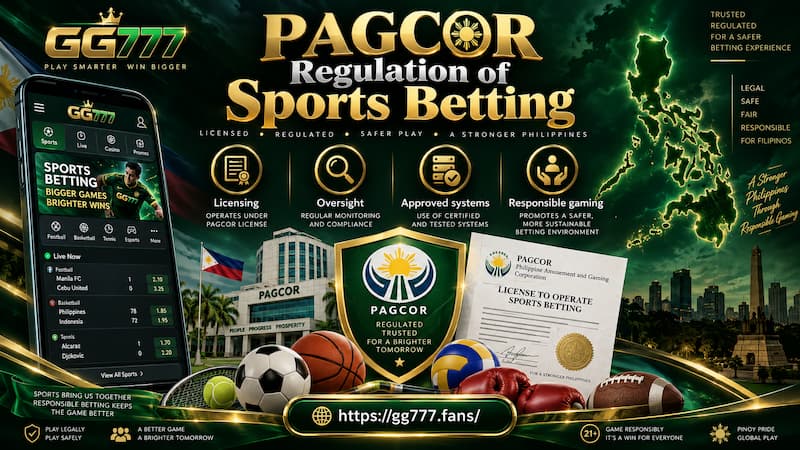
PAGCOR Regulation of Sports Betting
Philippine sports betting operates inside a regulated framework covering operators, gaming systems and approved game offerings. PAGCOR describes sports betting as one of the gaming activities handled by its Electronic Gaming Licensing Department, alongside electronic casino gaming and other digital products.
PAGCOR Regulation of Sports Betting
The current framework also makes an important distinction between licensing the operator and approving the underlying gaming environment. A gaming license grants an operator authority to conduct specified gaming activities, while platforms, systems and content are subject to regulatory review.
Live Sports and Virtual Sports
Sports betting itself is not treated as a single uniform product.
PAGCOR’s January 2026 framework lists separate revenue-share rates for:
- Live Sports: 15% of GGR
- Virtual Sports: 30% of GGR
Electronic casino games carry a 30% rate under the same framework. These percentages are amounts remitted by operators to PAGCOR based on GGR; they are not a 15% or 30% charge added directly to a player’s bet.
That difference is useful because it shows how regulation recognizes the economics of each game category rather than putting every form of online gambling into one bucket.
Approved Sports and Markets
Regulated sports betting content also depends on what has been approved for deployment. PAGCOR records have included sports such as basketball, baseball, football, tennis, volleyball, badminton, cricket and ice hockey among approved sports-betting content for particular gaming systems.
Approval of one sport does not mean every possible league, market or betting format is automatically available. Operators still work within the scope of approved systems and content.
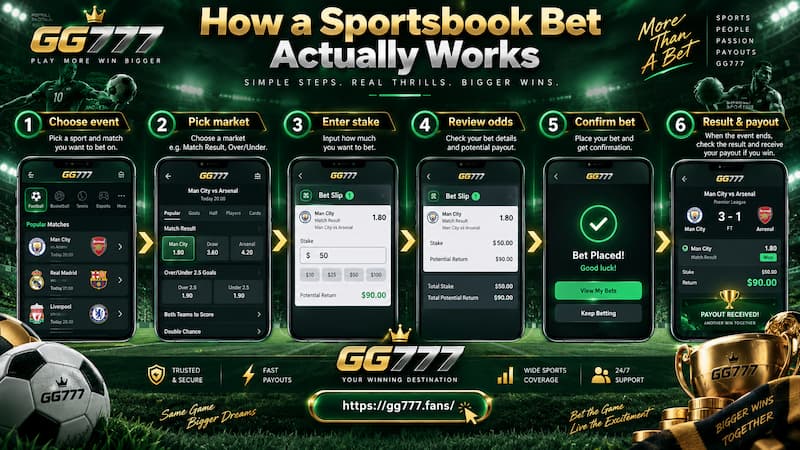
How a Sportsbook Bet Actually Works
The mechanics become clearer once the gambling terminology is stripped away.
How a Sportsbook Bet Actually Works
Suppose a basketball game has Team A listed at -4.5. Betting Team A does not simply mean predicting the winner. It means backing Team A to cover a 4.5-point handicap under the sportsbook’s settlement rules.
Common sportsbook markets include:
- Match winner or moneyline
- Handicap or point spread
- Total points, goals or runs
- Pre-match markets
- Live or in-play betting
- Parlays or accumulators
The bet remains unsettled until the relevant result is confirmed. That can introduce situations rarely encountered in instant casino games: Postponements, abandoned fixtures, overtime rules, void markets or a statistical correction can affect settlement.
Settlement Rules Deserve Attention
Two sportsbooks can offer similar-looking bets but apply different conditions around postponed events or overtime.
A practical bettor therefore checks more than the odds. The settlement rule attached to the market matters just as much. A wager priced attractively loses much of its appeal if the user misunderstood whether extra time counts.
This is one area where sports betting demands more reading than many casino games. The ticket may be simple; the conditions behind it are not always simple.
Sports Betting and Casino Games Serve Different Habits
The strongest distinction between sportsbook and casino activity is not visual design. It is time.
Sports betting is tied to schedules. A football wager might be placed in the afternoon and settled two hours later. A season-long futures bet can remain open for months.
Casino gaming is usually continuous. A baccarat hand finishes quickly. A slot result is known almost immediately.
That creates two very different patterns inside the same Sports Betting and Gambling industry.
Probability Versus Game Mathematics
Sports bettors usually think in terms of probability and price. Is an outcome more likely than the odds imply? Is a handicap too high? Has team news changed the market?
Casino games work from established mathematical structures. Knowing baccarat deeply does not remove its house advantage, and understanding a slot’s theme does not change the randomness of the next spin.
Knowledge can improve the quality of a betting decision, but it cannot turn uncertainty into certainty.
That distinction is worth keeping in mind whenever casino and sportsbook products appear together.
Digital Gaming Has Reshaped the Market
The growth of online gaming has changed how different gambling categories connect. Instead of treating sportsbook, casino and other products as completely separate destinations, modern accounts can bring several gaming functions together.
PAGCOR’s framework even allows operators to offer multiple game offerings, subject to the required licensing structure.
For the user, the practical experience may include one account, PHP-denominated balances, transaction records and mobile sports betting access from a phone.
For regulators, however, each activity still needs to fit within the rules that apply to that particular offering.
Payments Are Becoming More Controlled
Digital convenience has also brought tighter payment rules, especially around local bank betting payments and other regulated funding routes.
In August 2025, the Bangko Sentral ng Pilipinas ordered supervised financial institutions to remove in-app links that directly redirected users from mobile payment apps or websites to gambling services.
PAGCOR subsequently highlighted stronger payment safeguards across regulated digital gaming, alongside restrictions on credit cards and cryptocurrencies for betting.
This is an important change in the market. Growth is continuing, but the direction is not unlimited frictionless access. Traceability, account controls and responsible use are becoming part of the infrastructure.
GG777 in a Multi-Product Gambling Environment
Online casino brands can sit within this broader shift toward multi-product gaming. GG777 is associated with the Philippine online-casino market, where users increasingly expect different forms of gaming to be accessible from a familiar account environment rather than through completely separate experiences.
The useful distinction is still the product itself. Moving from a casino lobby to a sportsbook does not make the sportsbook another casino game. Odds, event timing, market settlement and risk evaluation remain fundamentally different.
That is also why a brand’s marketing identity should not be confused with regulatory status. Licensing and approved domains should be checked against current regulator records rather than assumed from a logo, payment option or familiar brand name.
Player Protection Is Part of the Industry Structure
Responsible gambling is no longer just a footer message attached to an account page.
PAGCOR states that people under 21, individuals listed in the National Database of Restricted Persons and several other restricted groups are not permitted to gamble in regulated environments.
Licensed operators are also required to integrate measures such as self-exclusion and betting limits.
Controls That Affect Real Users
For someone actually placing bets, these measures can appear through:
- Identity and age verification
- Account registration controls
- Deposit or betting limits
- Transaction monitoring
- Self-exclusion options
- Restrictions on particular payment methods
These controls may add friction, but they also make regulated digital betting more traceable and easier to separate from anonymous or unauthorized gambling activity.
Sports Betting’s Place in the Industry
Sports betting is best understood as a distinct vertical inside a much larger gambling economy. It shares technology, accounts, payments and sometimes brands with casino gaming, yet its mechanics remain tied to events, odds and settlement rules.
At the same time, the Philippine market is becoming increasingly digital. Online and electronic gaming already represented more than half of industry GGR in 2025, while regulatory changes continue to tighten licensing, payments and player-protection standards.
That combination defines the current Sports Betting and Gambling industry: More digital access, more crossover between gaming categories, and clearer regulatory boundaries around how those products are offered.